
Understanding Allophycocyanin and Its Role in Life Science and Industry
- Karen Hsu

- Jul 21
- 3 min read
Updated: Aug 3
Allophycocyanin (APC) is a bright blue pigment protein found in certain algae and cyanobacteria. It plays a key role in photosynthesis by capturing light energy and transferring it to chlorophyll. Beyond its natural function, APC has become a valuable tool in scientific research and various industries. I want to share what I’ve learned about APC, its properties, and how it supports fields like life science, cosmetics, and health supplements.

Close-up of allophycocyanin protein extracted from algae showing its vibrant blue color
What Is Allophycocyanin?
Allophycocyanin is a type of phycobiliprotein. These proteins absorb light in wavelengths that chlorophyll cannot, making photosynthesis more efficient. APC absorbs orange and red light and emits fluorescence in the far-red region. This property makes it useful as a fluorescent marker in laboratory experiments.
APC is found mainly in cyanobacteria and red algae. It forms part of the phycobilisome complex, which acts like an antenna to capture sunlight. The protein’s structure includes chromophores that give it its distinctive blue color and fluorescent ability.
Why APC Matters in Life Science Research
In the lab, APC is widely used as a fluorescent dye. Its bright fluorescence and stability make it ideal for labeling antibodies and other molecules. Researchers use APC in flow cytometry, immunofluorescence, and other techniques to detect and measure specific proteins or cells.
One example is the use of APC-conjugated antibodies to identify immune cells. The strong signal from APC helps scientists see rare cell populations clearly. This improves the accuracy of experiments and speeds up data collection.
APC in Cosmetics and Health Supplements
Beyond research, APC’s antioxidant properties attract interest in cosmetics and health products. Antioxidants help protect skin cells from damage caused by free radicals. Some companies explore APC extracts as natural ingredients for anti-aging creams and supplements.
In health supplements, APC is valued for its potential to support immune function and reduce inflammation. While research is ongoing, the natural origin and safety profile of APC make it a promising ingredient.
Examples of APC Products Supporting Research and Industry
To illustrate how APC is applied, I want to mention a few products that highlight its versatility:
Fluorescent Reagent: APC Fluorochrome
This reagent is designed for flow cytometry and immunoassays. It offers high brightness and photostability, helping researchers get clear results. You can learn more about it here.
Algae-Derived APC Extract
Extracted from Taiwan’s unique algae resources, this product provides high-purity APC for cosmetics and supplements. It supports natural formulation with consistent quality. More details are available here.
Custom APC Conjugation Service
For labs needing tailored fluorescent probes, this service offers conjugation of APC to antibodies or proteins. It ensures compatibility with specific research needs. Check it out here.
These examples show how APC products serve different purposes, from basic research to commercial applications. They also reflect the commitment to quality and innovation in the field.
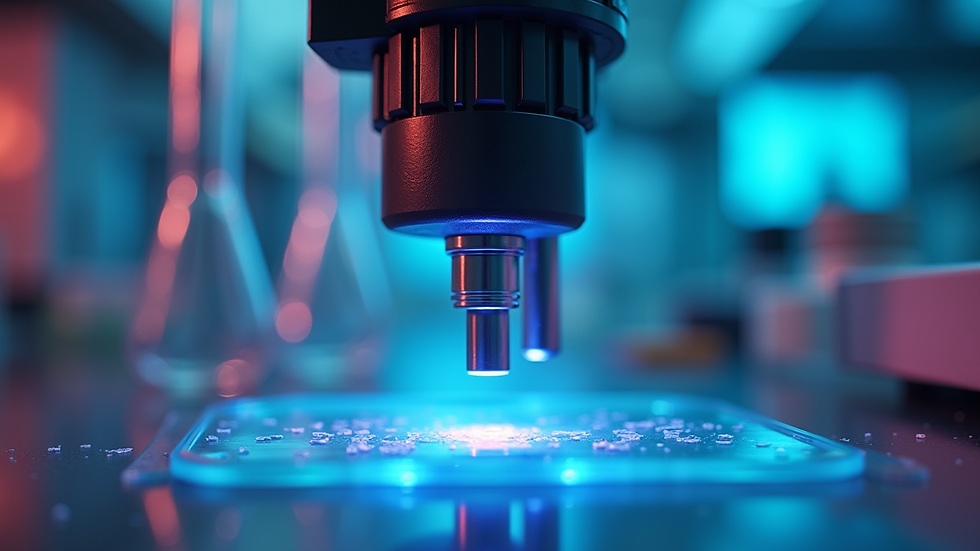
Laboratory setup for analyzing fluorescent proteins like allophycocyanin
How APC Supports Innovation in Taiwan’s Bioindustry
Taiwan has rich algae resources that provide a natural source of APC. Companies like 鴻藻生技 use these resources to develop high-quality fluorescent reagents and bioactive ingredients. This local advantage helps reduce costs and improve supply stability.
By focusing on algae-derived APC, these companies support industries such as life science research, cosmetics, and health supplements. Their products offer strong performance and good value, helping customers achieve better results.
Practical Tips for Using APC in Your Work
If you plan to use APC in experiments or product development, consider these points:
Store APC reagents properly, usually at low temperatures and protected from light, to maintain fluorescence.
Choose the right APC product based on your application, whether it’s flow cytometry, immunoassays, or formulation.
When working with APC extracts for cosmetics or supplements, verify purity and safety data.
Collaborate with suppliers who understand your industry and can provide technical support.
These steps help ensure you get the best performance from APC and avoid common issues.

Blue fluorescent protein samples glowing under UV light demonstrating APC fluorescence
Looking Ahead: The Future of APC Applications
Research on APC continues to expand. New methods aim to improve its stability and brightness. Scientists also explore combining APC with other fluorescent proteins for multi-color labeling.
In cosmetics and health, more studies will clarify APC’s benefits and safety. This will help develop new products that meet consumer demand for natural and effective ingredients.
The integration of APC into various fields shows how a natural protein can become a valuable tool beyond its original role. It also highlights the potential of algae resources in driving innovation.
Conclusion
APC stands out as a versatile and powerful protein. Its unique fluorescence supports advanced research, while its natural origin opens doors for cosmetics and health products. By choosing quality APC products and understanding their use, you can enhance your work and explore new possibilities.
Explore more about APC and related products at 鴻藻生技. Their expertise in algae-derived fluorescent reagents and bioactive ingredients offers practical solutions for your needs.


Comments